Around the world
What El Niño does
El Niño starts in one ocean but reaches every continent. Some of its effects are disasters, some are spectacular, and none of them are guaranteed.
Not guaranteed, only more likely
Every official source starts with a warning. NOAA says El Niño’s far-flung effects, called teleconnections, “are likely during El Niño events, but not certain.” [NOAA] The WMO says that not all regions are affected, that impacts can differ even within a region, and that each event’s effects depend on its strength, length, timing and how it interacts with other patterns such as the Indian Ocean Dipole. [WMO] NOAA adds that the strength of an El Niño, from weak to very strong, influences the odds of the outcomes. [NOAA]
South America: rain where it hardly ever falls
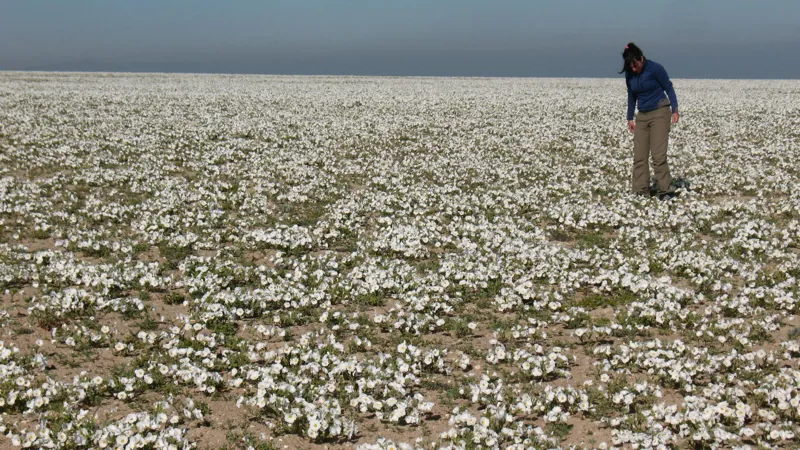
The coast that named El Niño feels it first. NOAA says record rainfall often strikes Peru, Chile and Ecuador during an El Niño year. [NOAA] In 2026 the rain reached one of the driest places on Earth. NASA’s Earth Observatory reported on 19 November 2026 that storm fronts fed by an atmospheric river brought one of the heaviest July rain events in decades to a long stretch of Chile, from the Atacama region south to Los Lagos, followed in August by rare snow in parts of the Atacama Desert. [NASA Earth Observatory]
The rain woke seeds lying dormant in the soil, “setting off what scientists say may be the most extensive desierto florido,” or flowering desert, “of the satellite era.” [NASA Earth Observatory] NASA explains the link: during El Niño the subtropical Pacific high that normally keeps the region dry weakens, while a blocking high tends to form in the South Pacific near the tip of South America. [NASA Earth Observatory] The photograph on this page shows an earlier flowering, in 2010.
Fish on the move
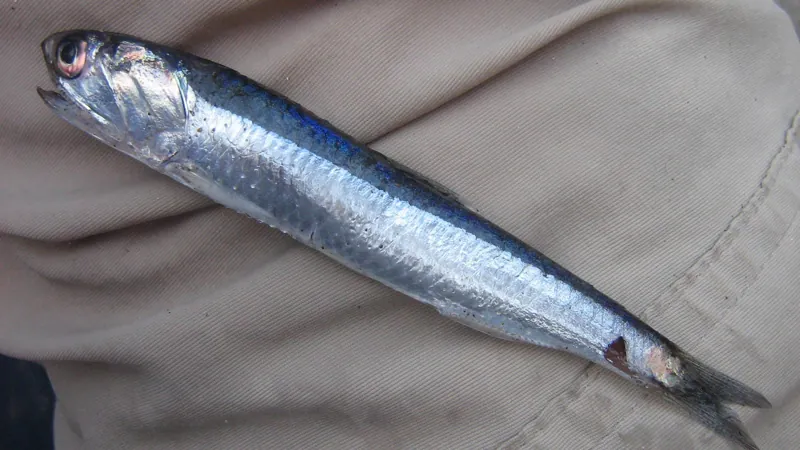
The sea changes too. NOAA says warmer water and altered currents change the distribution and abundance of fish and other species off northern South America, as marine life migrates north and south following colder water; in strong El Niños the changes can be seen as far north as the Gulf of Alaska. [NOAA] PMEL lists the fisheries affected: tuna, sardines, salmon and Peruvian anchovetta. [NOAA PMEL]
The cause is the loss of the cold upwelling. PMEL says the cooler water off South America is normally nutrient-rich, and that in El Niño the rise in sea temperature brings “a drastic decline in primary productivity,” which affects the food chain all the way up to commercial fisheries. [NOAA PMEL]
Asia and Australia: drought and fire
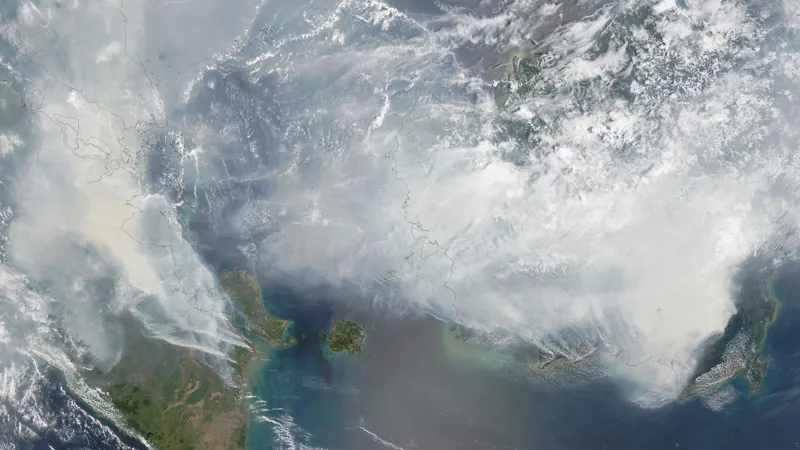
On the other side of the Pacific the effect flips. NOAA says El Niño can cause severe droughts over Australia, Indonesia and parts of southern Asia. [NOAA] The Royal Meteorological Society lists severe droughts, increased wildfire risk, intense heatwaves and weakened monsoon rains for south-east Asia and Australia. [Royal Meteorological Society] PMEL notes that the drought in the West Pacific is sometimes associated with devastating brush fires in Australia. [NOAA PMEL]
Coral reefs: bleaching in hot water
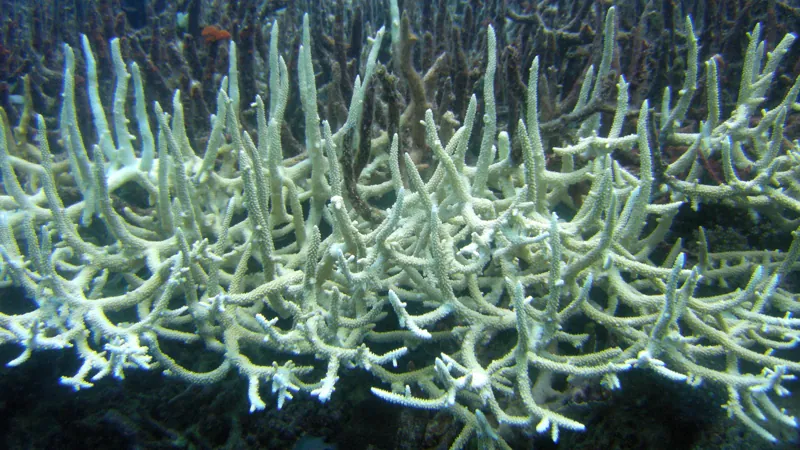
PMEL explains that coral bleaching happens when sea temperatures rise above a threshold of about 28°C, at which corals expel the colourful algae that live inside them. [NOAA PMEL] It says bleaching was particularly pronounced in 1997–98, because a very strong El Niño’s warming was added on top of a slow upward warming trend in parts of the Pacific and Indian Oceans. [NOAA PMEL]
North America and the hurricanes
A strong El Niño shifts the Pacific jet stream and the track of winter storms, NOAA says, bringing more winter storms over California and the southern United States. [NOAA] In winter it typically brings wetter and cooler conditions across the southern US from central California to Florida, and warmer, drier conditions for the northern tier. [NOAA]
In summer it changes the hurricanes. NOAA says El Niño’s warm water can fuel hurricanes in the central and eastern Pacific while it hinders hurricane formation in the Atlantic. [NOAA] The Climate Prediction Center explains the Atlantic side: stronger upper-level westerly winds raise the vertical wind shear and reduce hurricane activity across the tropical North Atlantic. [NOAA Climate Prediction Center]
The whole planet: a warmer year
El Niño also lifts the global average. The Royal Meteorological Society says it “amplifies planetary warming, often triggering record-high global temperatures.” [Royal Meteorological Society]
And the UK?
Britain is a long way from the Pacific, and even the direction of the effect can change. The Met Office’s ENSO forecast page says the North European (Baltic) region is marked as a cold impact on its El Niño map, “but very strong El Niño events (e.g. 1997/98, 1982/83) have an opposite warm impact.” [Met Office] Its maps, it adds, do not show how severe impacts are. [Met Office] This site keeps the UK picture as risks rather than forecasts; see a UK winter, as a risk.
Enjoyed a dated official advisory, unblended thresholds, and a careful look at chances rather than guarantees?
No pop-ups. No intrusive advertising. Just interesting stuff. A little support helps the next climates.im site get built.